
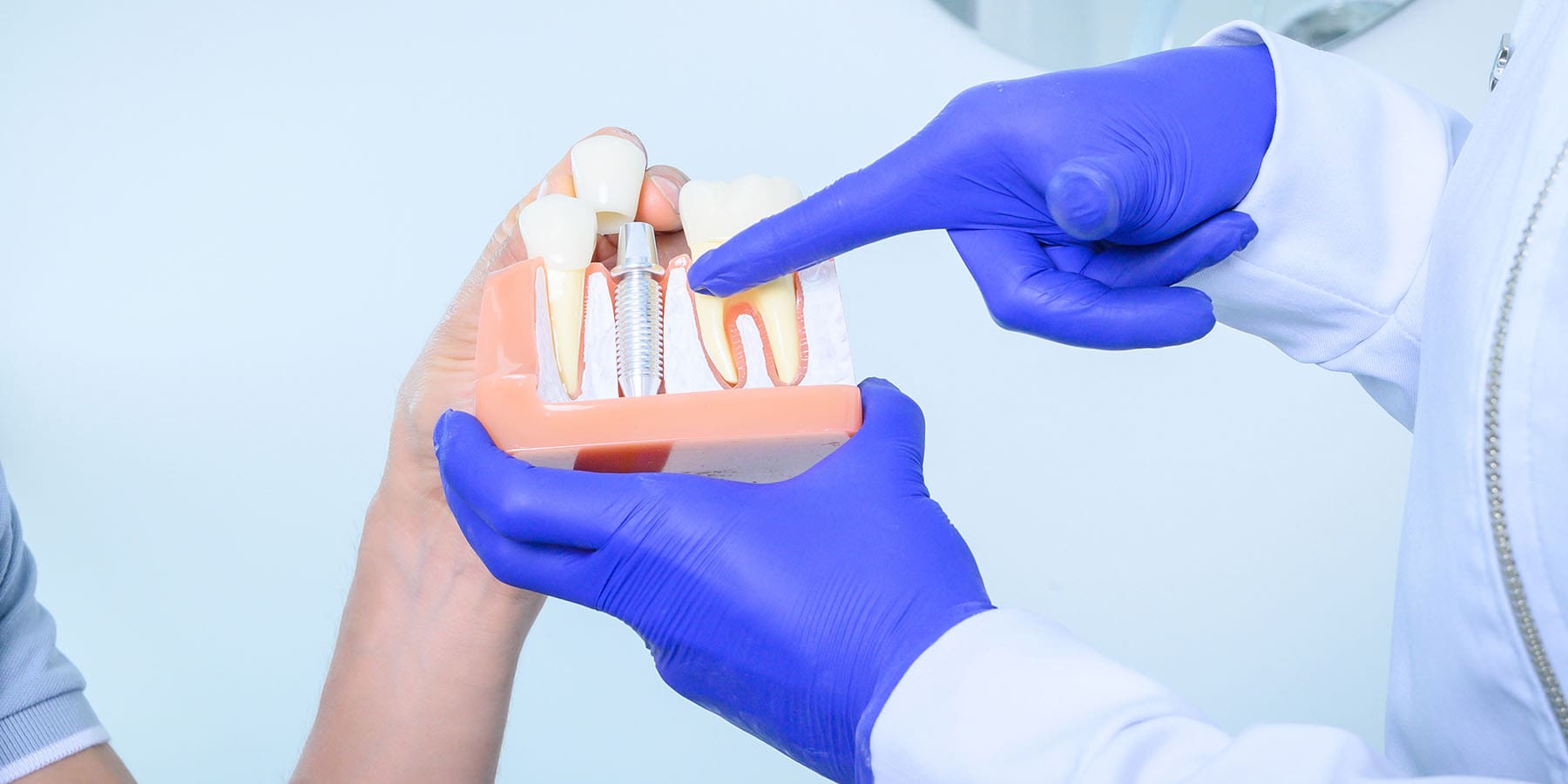

Gum disease damages the tissue and bone that support your teeth, so it is reasonable to wonder whether dental implants are still an option if you have or had gum disease. In many cases, they are, but the gum disease needs to be treated and stable before implant surgery can move forward.
Table of Contents
Can You Get Dental Implants If You Have Gum Disease?
Yes, many patients with a history of gum disease can still receive dental implants. The key question is whether the disease is active and whether enough healthy bone and gum tissue remain to support treatment.
Mild inflammation may require relatively simple care, while advanced periodontitis may need more extensive treatment before implant planning can begin. A previous diagnosis of gum disease does not automatically rule out implants.
Why Active Gum Disease Should Be Treated First
Dental implants need healthy gum tissue and stable bone for long-term support. Active gum disease can cause deep periodontal pockets, ongoing infection, and loss of the bone that supports the teeth. Those conditions are not ideal for placing an implant.
Treating the disease first helps create a more stable, easier-to-maintain environment around the future implant. Implant surgery should be planned only after the inflammation is under control and the gums have been reassessed.
What Treatment May Be Needed Before Dental Implants?
The purpose of treatment is to control active infection and create a healthier foundation for implant placement. The exact steps depend on the severity and location of the gum disease.
Treatment may include:
- Professional cleaning above and below the gumline
- Scaling and root planing to clean deeper periodontal pockets
- Treatment of persistent areas of infection
- Removal of teeth that cannot be predictably maintained
- Bone grafting where additional implant support is needed
- Improved brushing, flossing, or interdental cleaning
- A periodontal maintenance schedule
After treatment, the gums are reassessed. Implant planning can begin once inflammation is controlled, the tissues are stable, and the remaining teeth can be cleaned effectively.
Gum disease treatment and implant placement are not always completed by the same provider. Care may be coordinated between the dentist, a periodontal provider, and Dr. Barron so each stage supports the final result.
How Implant Candidacy Is Evaluated
Once active gum disease is under control, the next step is to determine whether the mouth is ready for implant treatment. This involves evaluating the proposed implant site as well as the health of the surrounding teeth and gums.
Available Bone
Advanced gum disease can reduce the height or width of the jawbone. Dental X-rays or CBCT imaging can show whether there is enough bone to support an implant and whether bone grafting may be needed.
Not every patient with a history of gum disease requires a graft. The decision depends on the amount and condition of bone at the specific implant site.
Gum Health and Remaining Teeth
The gums should be stable, and any remaining teeth must be assessed. Some teeth may respond well to periodontal treatment, while others may have lost too much support to maintain predictably.
Natural teeth that can be treated and maintained do not need to be removed simply because implants are being considered.
Other Factors That Affect Healing
The evaluation may also include:
- Your dental and medical history
- Periodontal pocket depths
- Smoking or nicotine use
- Diabetes and blood sugar control
- Bite forces and teeth grinding
- The type of crown, bridge, or implant-supported restoration planned
Some patients may be ready for implant placement once their gum health improves. Others may need additional healing after periodontal treatment, an extraction, or bone grafting.
The Long-Term Commitment to Implant Care
Dental implants require ongoing care, especially for patients with a history of gum disease. Maintaining stable results means committing to thorough daily cleaning and regular professional maintenance after implant placement.
You will need to brush around the implant, clean beneath or between the restoration as instructed, and attend follow-up visits on the schedule recommended by your dental team. These appointments allow the gums, supporting bone, bite, and implant restoration to be monitored over time.
Dental implants are not affected by cavities, but the gum and bone around them remain vulnerable to inflammation and infection. Consistent home care and professional monitoring are essential for keeping the implants clean, stable, and functional.
Find Out Whether Dental Implants Are Right for You
A current or previous diagnosis of gum disease does not necessarily mean dental implants are out of reach. Treating active disease, evaluating the available bone, and committing to long-term maintenance can create better conditions for lasting implant treatment.
You do not need a referral to schedule a dental implant consultation with Dr. Robert Barron. To schedule an appointment at our oral surgery office in Vaughan, call (905) 669-2616 or visit us at 3300 Hwy 7 W #805, Vaughan, ON L4K 4M3.
FAQs
How long after gum disease treatment can I get implants?
The timeline depends on the severity of the disease, the treatment completed, and how the tissues respond. Implant placement may be considered once infection and inflammation are controlled and the site has enough stable bone.
Can mild gum disease cause a dental implant to fail?
Mild gum inflammation does not mean an implant will fail, but it should still be treated. Continuing inflammation and poor plaque control can increase the risk of problems around natural teeth and implants.
Can you get implants if gum disease has caused bone loss?
Bone loss may limit the available support, but bone grafting can sometimes rebuild the area. CBCT imaging helps determine whether grafting is needed and what treatment options are realistic.
Will dental implants stop gum disease?
Implants replace missing teeth but do not cure gum disease. Any active disease affecting the remaining teeth must be treated, and continued maintenance is needed after implant placement.
