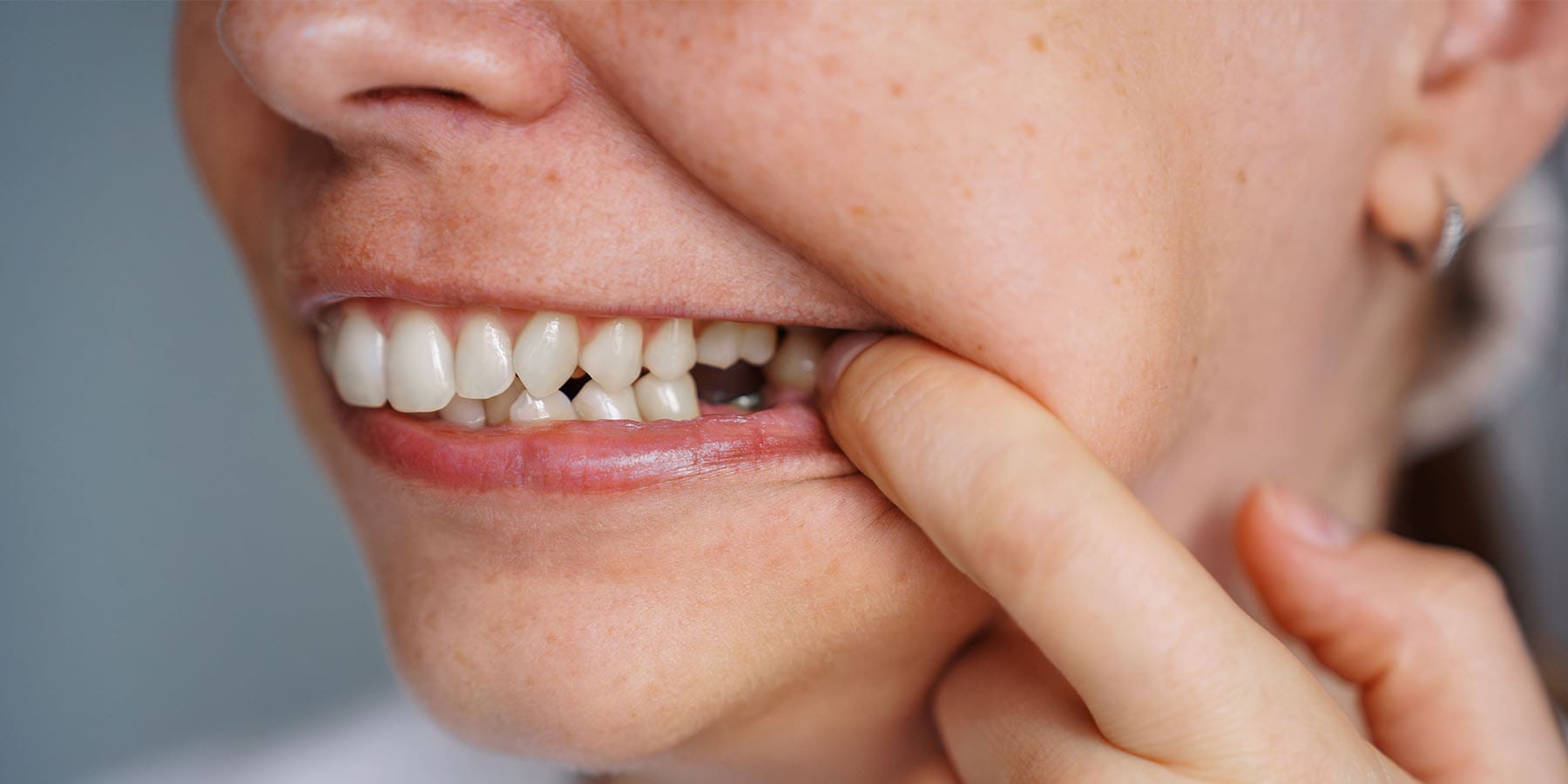

If you do not replace a missing tooth, the jawbone in that area can gradually lose volume, nearby teeth may shift, and your bite and chewing function can change. These effects do not happen to everyone at the same rate, and whether a tooth needs replacement depends on its location and the condition of the rest of your mouth.
Table of Contents
Your Jawbone Can Lose Volume After Tooth Loss
After a tooth is lost, the bone that once supported its root gradually begins to lose volume. This happens because the jawbone no longer receives the same stimulation from biting and chewing in that area.
Over time, the ridge can become narrower and shorter. The amount of change varies, but significant bone loss can affect whether there is enough support for a future dental implant.
Nearby Teeth May Shift Into the Open Space
Teeth next to a missing tooth can gradually tilt or drift toward the open space. The opposing tooth may also extend farther from its socket because it no longer meets a tooth when you bite.
This movement can change the spacing between your teeth and create areas that trap food or are more difficult to brush and floss. It may also reduce the space available if you decide to replace the tooth later.
How Does a Missing Tooth Affect Your Bite?
Missing teeth can affect how chewing forces are distributed across your mouth. A missing molar may make it more difficult to break down firm or fibrous foods on that side, while a missing front tooth can affect biting into food and the pronunciation of certain sounds.
As nearby teeth move, the way your upper and lower teeth meet can also change. The extent of these changes depends on which tooth is missing, your existing bite, and the condition of the remaining teeth.
How Soon Do Changes Happen After Losing a Tooth?
Bone loss can begin soon after a tooth is removed, with some of the greatest changes occurring during the first several months. How much bone is lost varies from person to person.
There is no exact timeline for tooth movement. Some spaces remain relatively stable for years, while others gradually narrow as surrounding teeth tilt or drift.
If you know a tooth needs to be removed and may want an implant later, socket preservation can help maintain the shape of the extraction site while it heals.
Do All Missing Teeth Need to Be Replaced?
No, not every missing tooth needs to be replaced. Wisdom teeth are not replaced after removal, some spaces can be closed through orthodontic treatment, and teeth near the back of the mouth may not significantly affect chewing or the stability of the bite.
Whether replacement is appropriate depends on factors such as:
- Which tooth is missing
- Whether the space affects eating or speaking
- The condition of the surrounding teeth
- How the upper and lower teeth meet
- Whether nearby teeth have already moved
- Your long-term treatment goals
An evaluation can determine whether leaving the space untreated is likely to affect your oral health or function.
Waiting Can Make Future Tooth Replacement More Involved
You may still be able to replace a tooth years after it was lost, but waiting can sometimes add steps to treatment.
If the ridge no longer has enough height or width to support an implant, dental bone grafting may be needed before implant placement. More extensive changes to the ridge may require ridge augmentation.
Tooth movement can also reduce the space available for a replacement tooth. In some cases, orthodontic treatment or changes to the restorative plan may be necessary before the gap can be restored.
These changes do not necessarily prevent treatment. An earlier evaluation can help you understand your options even if you are not ready to replace the tooth immediately.
Find Out Whether Your Missing Tooth Should Be Replaced
At Concord Oral Surgery, Dr. Robert Barron can evaluate the missing tooth site, surrounding teeth, bite, and available bone to determine whether dental implant treatment is appropriate. CBCT imaging and digital scanning may be used when additional information is needed for treatment planning.
If you have been living with a missing tooth or recently learned that a tooth needs to be removed, an evaluation can help you understand whether replacement is recommended and what treatment may involve.
To schedule an appointment at our oral surgery office in Vaughan, call (905) 669-2616 or visit us at 3300 Hwy 7 W #805, Vaughan, ON L4K 4M3.
FAQs
What happens if you lose a back tooth and don’t replace it?
A missing back tooth may reduce chewing efficiency, and nearby teeth can gradually tilt or drift toward the open space. Whether the tooth needs replacement depends on its location, the opposing tooth, your bite, and the condition of the surrounding teeth.
Can one missing tooth cause other teeth to shift?
Teeth next to an open space can tilt or drift toward it, although the amount and speed of movement vary. The opposing tooth may also move farther into the space when it no longer contacts another tooth.
Can a missing tooth change the shape of your face?
One missing tooth usually does not cause an obvious change in facial appearance. Losing several teeth can reduce dental and bone support over time, which may contribute to changes in facial structure.
