

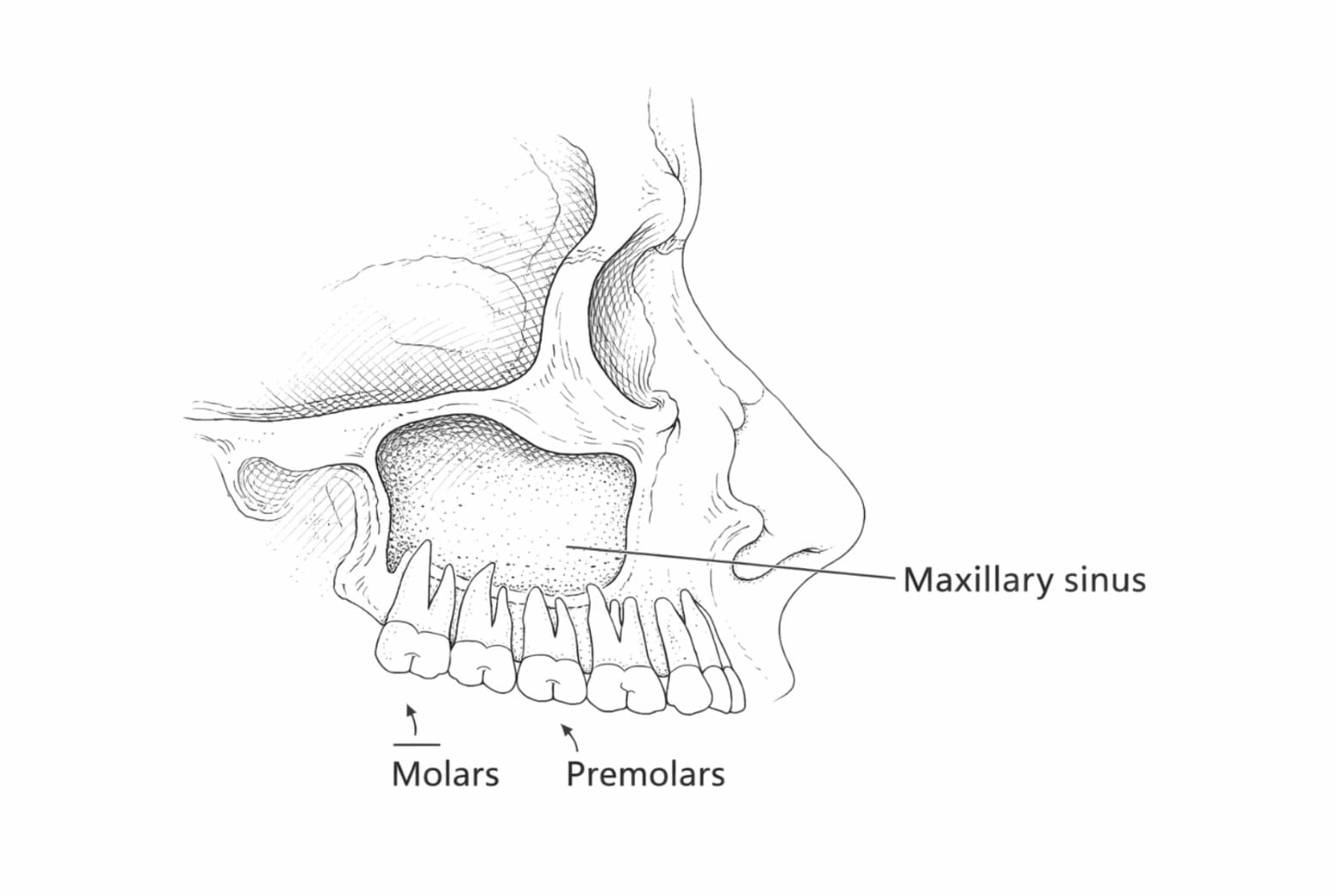
An upper tooth extraction usually heals without incident, but in some cases the roots of the tooth sit very close to the sinus cavities within the maxillary sinus. When that thin barrier, known as the sinus membrane, is disrupted during removal, a small opening can form between the mouth and the nasal cavity.
Table of Contents
Common Symptoms of Sinus Perforation
Some perforations are detected immediately during dental procedures, but others become noticeable during healing as sinus problems begin to develop. Common symptoms include:
- Air or fluid movement: A sensation of air passing between the mouth and nose, especially when breathing or speaking.
- Fluid leakage: Liquids or nasal discharge moving from the mouth into the nose or nasal cavity when drinking.
- Pressure or fullness: A feeling of sinus pressure or nasal congestion on one side of the face.
- Sinus discomfort: Dull pain or aching near the cheek or under the eye.
- Delayed healing: The extraction site does not close or feels unusual after several days.
Some sinus perforations do not cause immediate symptoms and may only be identified during follow-up care.
What to Do If You Suspect a Perforation
If you notice any of these symptoms after a tooth extraction, contact your oral surgeon. Avoid actions that increase sinus pressure, such as blowing your nose or forceful sneezing. Early assessment helps reduce the risk of sinus infection and healing complications.
What Causes a Sinus Perforation?
The maxillary sinuses sit directly above the upper back teeth. In some people, the roots of these teeth lie very close to the sinus floor. The roots and the sinus are separated by only a thin layer of bone and sinus membrane.
During extraction, this thin barrier can be disrupted, allowing a small connection to form between the mouth and the sinus. This can occur even during routine extractions and does not mean something went wrong.
Natural differences in anatomy, thin bone, curved or long roots, or changes to the sinus over time can all increase the likelihood of a sinus opening during upper tooth removal.
How Sinus Perforations Are Treated
Treatment depends on the size of the opening, the condition of the sinus membrane, and how quickly it is addressed.
Small Perforations
Small openings often heal on their own with conservative care.
- Antibiotics may be prescribed to prevent sinus infection.
- Nasal decongestants can reduce pressure in the sinus.
- Soft tissue protection allows natural closure during healing.
Larger or Persistent Perforations
Larger openings or those that do not close require surgical management.
- The opening is closed using gum tissue or a small surgical flap.
- A sinus lift may be performed to reinforce the sinus floor.
- The area is sealed to restore separation between mouth and sinus.
With proper treatment, healing outcomes are generally excellent.
What to Expect After Treatment
Most sinus perforations heal without long-term complications when properly managed. Healing time depends on the size of the opening and the treatment required, but once the area closes, normal function is restored.
Patients are typically advised to avoid activities that increase sinus pressure during healing and to attend follow-up appointments to confirm proper closure. When addressed early, sinus perforation does not usually affect long-term oral or sinus health.
When to Contact an Oral Surgeon
If you have concerns about healing after an upper tooth extraction or notice symptoms that do not improve, contacting an oral surgeon for evaluation and guidance is appropriate. If you are a patient of Concord Oral Surgery, you can contact our office for follow-up care and assessment.
To book an appointment at our oral surgery office in Vaughan, ON, call (905) 669-2616 or visit us at 3300 Highway 7 West, Suite 805 Vaughan, ON.
FAQs
Is sinus perforation permanent?
No,a sinus perforation is not permanent. Small openings often close during healing, and larger perforations can be repaired with treatment, restoring normal anatomy.
How painful is a sinus perforation?
A sinus perforation itself is often not painful. Many patients notice pressure, nasal congestion, or unusual sensations rather than sharp pain. Discomfort usually comes from sinus irritation or infection rather than the opening itself.
Can a dentist fix a perforated sinus?
Small perforations may be managed by a dentist if identified immediately. Larger or persistent openings are best treated by an oral surgeon, who can close the sinus safely and protect long-term healing.
What should be avoided with a sinus perforation?
Avoid blowing your nose, forceful sneezing, smoking, using straws, or creating suction in the mouth. These actions increase sinus pressure and can prevent the opening from closing properly.
Can you still get a dental implant after a sinus perforation?
Yes, a dental implant may still be possible after a sinus perforation. Some patients may need an additional procedure, such as a sinus lift, to restore bone support before implant placement.
